
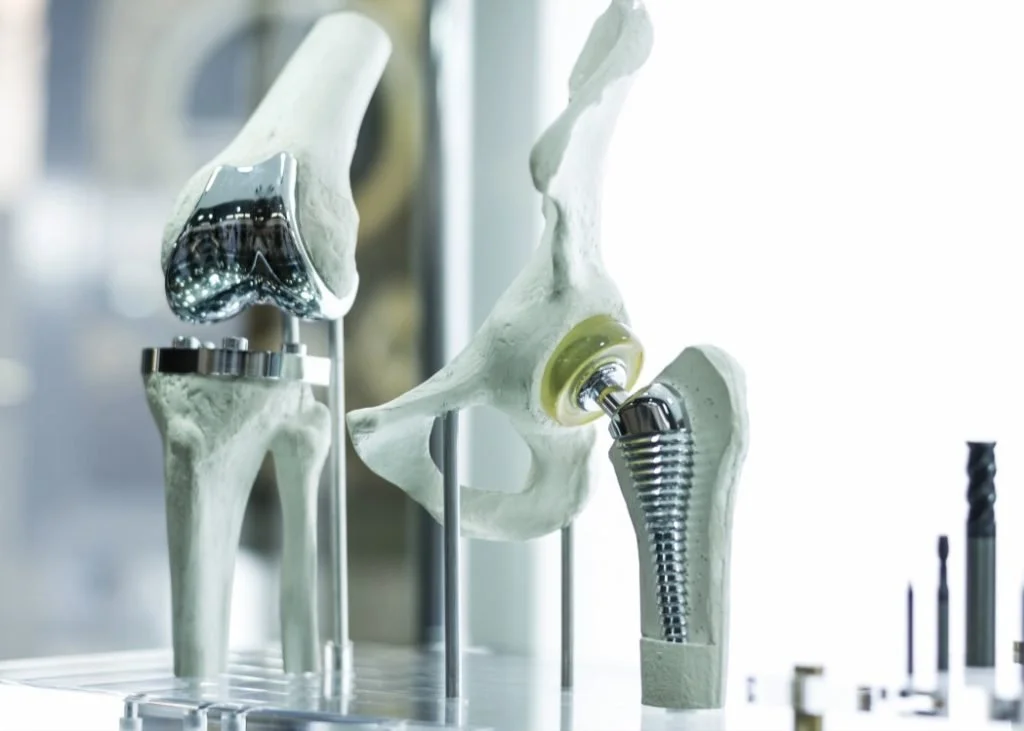
REVISION HIP / KNEE REPLACEMENT
REVISION TOTAL HIP REPLACEMENT
What is a Revision Total Hip Arthroplasty?
A total hip arthroplasty (replacement) is one of the most successful procedures in medicine, helping people reduce pain and return to an active lifestyle. However, over time, the artificial hip joint (implant) can wear out, loosen, or fail for various reasons, which is why regular follow-ups are necessary to monitor for any clinical concerns.
When these concerns arise through a series of tests, a revision of total hip replacement may be needed. During this procedure, Dr. Braly may remove some or all of the original implant and replace it with a new component. Revision total hip replacement is considered more complex than primary hip replacement, and the surgery may take longer to perform and recover from. Before recommending this surgery, Dr. Braly will evaluate the patient through a series of tests and/or examinations to ensure the best possible outcome.
The goal of a revision total hip replacement is to relieve pain, improve mobility, and restore function in patients whose original hip replacements are no longer serving their bodies as well as possible.
When is Revision of Total Hip Replacement Recommended?
Mechanical Complications (e.g., Poly Wear or Loosening)
For a hip replacement to work well, the implant must stay firmly attached to the bone, but over time it can loosen, leading to pain.
Fracture or Injury
A periprosthetic fracture is a break in the bone around a hip implant, most often caused by a fall, and it may require revision surgery.
Infection
Infection after a hip replacement is rare but can occur at any time, sometimes from bacteria elsewhere in the body. It may cause pain, swelling, or instability, and treatment often involves antibiotics and, in many cases, surgery. The approach depends on the type of bacteria, implant stability, and the patient’s overall health.
Other Factors...
Regardless of the indication, Dr. Braly and the team are here to support you in your care. If you are concerned about your implant or face a challenge that may require evaluation by an Orthopedic Surgeon specializing in Hip/Knee Joint Replacement, please do not hesitate to contact the office for a consultation.
REVISION TOTAL KNEE REPLACEMENT
What is a Revision Total Knee Arthroplasty?
A total knee arthroplasty (replacement) is also one of the most successful procedures in medicine, given how long it lasts compared to older models, helping people live more active lives with less pain. However, over time, the artificial knee joint (implant) can wear out, loosen, instable or fail for various reasons, which is why regular follow-ups are necessary to monitor for any clinical concerns.
When these concerns arise through a series of tests, a revision of total knee replacement may be needed, as the knee may become painful, swollen, stiff, or unstable. This may make everyday activities more difficult. During this procedure, Dr. Braly may remove some or all of the original implant and replace it with new components. Revision knee replacement is typically more complex than the initial surgery and may take longer to perform. It requires careful planning and specialized implants to achieve the best possible outcome. Before recommending this surgery, Dr. Braly will evaluate the patient through a series of tests and/or examinations to ensure the best possible outcome.
The goal of total knee replacement is to relieve pain, restore stability, and improve the function of your knee.
When is Revision of Total Knee Replacement Recommended?
Mechanical Complications (e.g., Poly Wear or Loosening)
A knee replacement works best when the implant remains securely attached to the bone, but over time, it may loosen, which can lead to pain, instability, or changes in how the knee moves.
Instability
Knee instability can occur when the ligaments and surrounding soft tissues are unable to properly support the joint, sometimes due to stretching, damage, or implant alignment issues. This may cause symptoms like swelling, pain, or a feeling that the knee is “giving way.”
Fracture or injury
A periprosthetic fracture is a break in the bone around a knee replacement, often caused by a fall, and may require revision surgery. Treatment depends on the fracture’s location, implant stability, bone quality, and any underlying conditions, and in severe cases, a larger revision implant may be needed.
Infection
Infection is a rare but serious complication of total knee replacement. If an implant becomes infected, it can cause pain, swelling, stiffness, and loss of attachment to the bone, often requiring revision surgery. Treatment depends on factors such as the type and duration of infection and typically involves antibiotics combined with surgery to remove or replace the implant.
Other Factors...
Regardless of the indication, Dr. Braly and the team are here to support you in your care. If you are concerned about your implant or face a challenge that may require evaluation by an Orthopedic Surgeon specializing in Hip/Knee Joint Replacement, please do not hesitate to contact the office for a consultation.